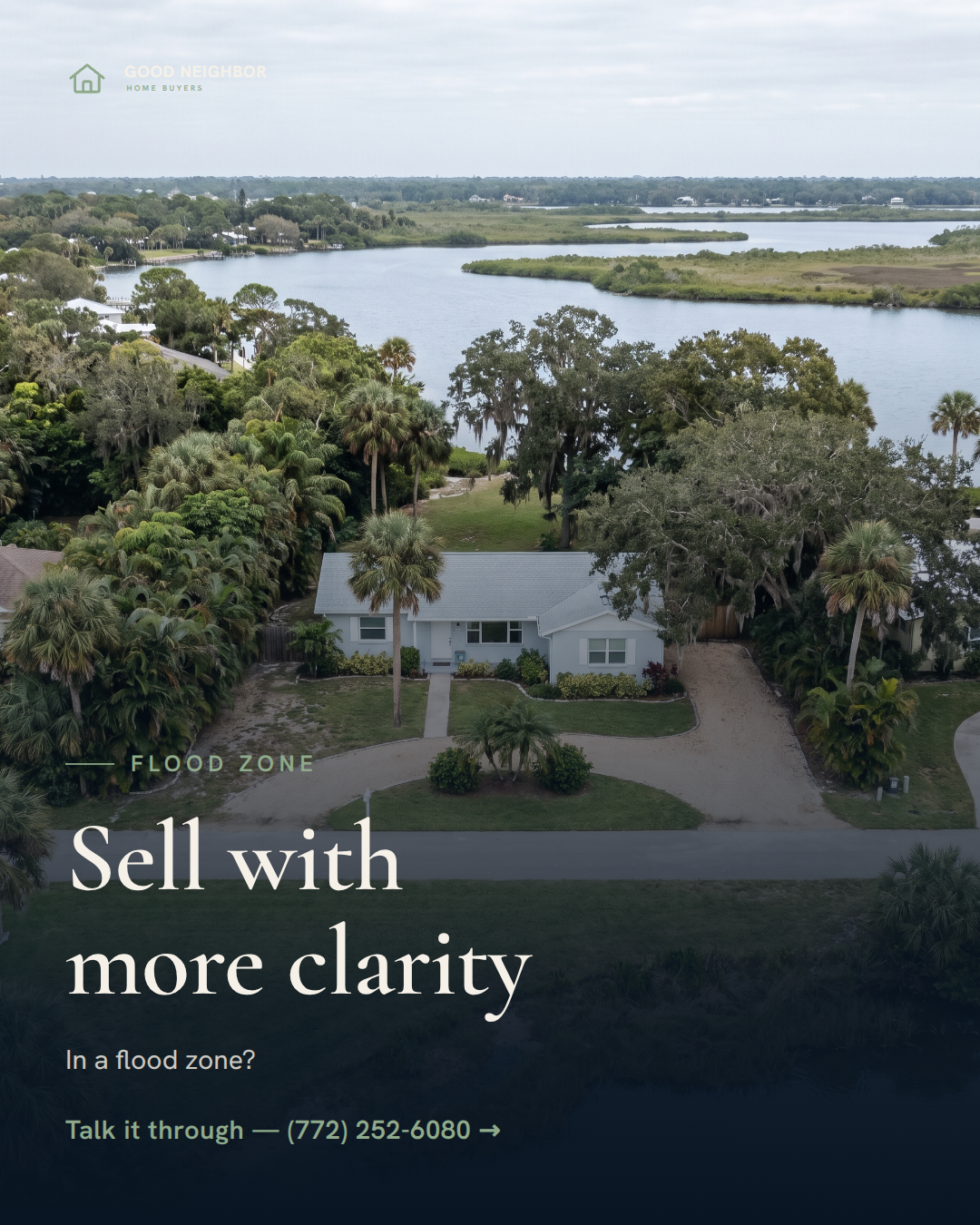
If you own a home in a Fort Pierce flood zone, selling can feel more complicated than it should be. Between FEMA maps, insurance requirements, and buyer hesitation, the process raises questions that most online guides never quite answer. This article breaks down what Fort Pierce flood zone selling actually looks like in 2026 — honestly, without the hype — so you can make a clear-headed decision about your next step.
How Fort Pierce Flood Zones Work
FEMA divides land into flood zones based on the likelihood of flooding during a given year. In St. Lucie County, you'll see several designations, but the ones that matter most to Fort Pierce homeowners are Zone AE, Zone VE, and Zone X.
Zone AE covers much of the low-lying land near the Indian River Lagoon, along US-1, and through older neighborhoods like Edgewood and parts of Garden City. These areas have a 1% annual chance of flooding — what's often called the 100-year floodplain. Zone VE applies to coastal stretches near Hutchinson Island and carries even stricter building requirements because of wave action. Zone X (shaded or unshaded) means lower risk, though flooding can still happen.
You can look up your property's designation on FEMA's Flood Map Service Center or through the St. Lucie County Property Appraiser website. Knowing your zone is the first step before listing or accepting any offer.
Why Fort Pierce Flood Zone Selling Gets Complicated
When a home sits in a high-risk flood zone, traditional buyers face extra hurdles. Their mortgage lender will almost certainly require flood insurance, which has become significantly more expensive under FEMA's Risk Rating 2.0 pricing model. Annual premiums that were once a few hundred dollars can now run into the thousands.
That cost gets factored into what a financed buyer is willing to pay. Some walk away entirely. Others submit lowball offers to offset the insurance burden. Either way, your pool of interested buyers shrinks.
There's also the inspection and appraisal process. If your home has any history of water or storm damage, lenders may require additional documentation, elevation certificates, or even repairs before they'll approve the loan. Each requirement adds time and uncertainty.
Disclosure Requirements in Florida
Florida law doesn't specifically require sellers to disclose flood zone status, but you are required to disclose known material facts — including past flooding, water intrusion, or insurance claims. Being upfront protects you legally and builds trust with any buyer, whether they're paying cash or financing.
If your property has had repetitive flood losses or has been part of a FEMA mitigation program, those details will likely surface during the buyer's due diligence anyway.
What an Elevation Certificate Means for Your Sale
An elevation certificate documents your home's lowest floor relative to the base flood elevation (BFE) in your zone. If your home sits above the BFE, flood insurance premiums may be lower, which makes the property more attractive to financed buyers.
If your home sits below the BFE — common in older Fort Pierce neighborhoods built before modern floodplain regulations — premiums climb and some buyers simply can't afford the carrying cost. Getting an elevation certificate before you sell (typically a few hundred dollars from a licensed surveyor) can save weeks of back-and-forth later.
Options When Traditional Buyers Won't Commit
Homes in high-risk flood zones often sit on the market longer than comparable properties in Zone X. If you've experienced that frustration — or if you'd rather not deal with the drawn-out process of inspections, insurance negotiations, and financing contingencies — a direct sale to a cash buyer is worth considering.
At Good Neighbor Home Buyers, we purchase homes in every flood zone across the Treasure Coast, including properties with past water damage, older construction, or no elevation certificate on file. There are no commissions, no repair requests, and no lender hoops. You can request a no-obligation cash offer and see if the numbers work for your situation.
We're not the right fit for every seller, and we'll always be honest about that. But if your flood zone designation is making a traditional sale difficult, it's a conversation worth having.
Neighborhoods Where This Comes Up Most
We regularly hear from homeowners in North Beach, Little Mud Creek areas along Virginia Avenue, the Old Fort Park neighborhood, and waterfront properties along Seaway Drive. Many of these homes were built in the 1950s through 1970s, before current elevation standards, and sit squarely in Zone AE or VE.
If you own a home in one of these areas and want to understand your options, we're happy to walk through them — no pressure, no obligation. Learn more about how we work with Fort Pierce homeowners.
Frequently Asked Questions
Does being in a flood zone automatically lower my home's value?
Not automatically, but it can reduce the number of willing buyers and increase their costs, which often leads to lower offers on the open market. The impact depends on your specific zone, your home's elevation, and current insurance pricing.
Can I sell my Fort Pierce home without an elevation certificate?
Yes. There's no legal requirement to have one before selling. However, financed buyers will likely need one for their insurance quote, and not having it ready can delay or derail a sale. Cash buyers like Good Neighbor Home Buyers don't require one.
What if my home has flooded before — do I have to disclose that?
Florida requires sellers to disclose known material defects, which includes past flooding or water damage. Being transparent protects you from future legal issues and is simply the right thing to do.
How quickly can I sell a flood zone property for cash?
Every situation is different, but we can typically close in as few as two to three weeks once you accept an offer. There's no waiting on lender approvals or insurance clearances. Call us at (772) 252-6080 to start a conversation.
This article is general information, not legal or financial advice. For your specific situation, talk to a qualified professional.