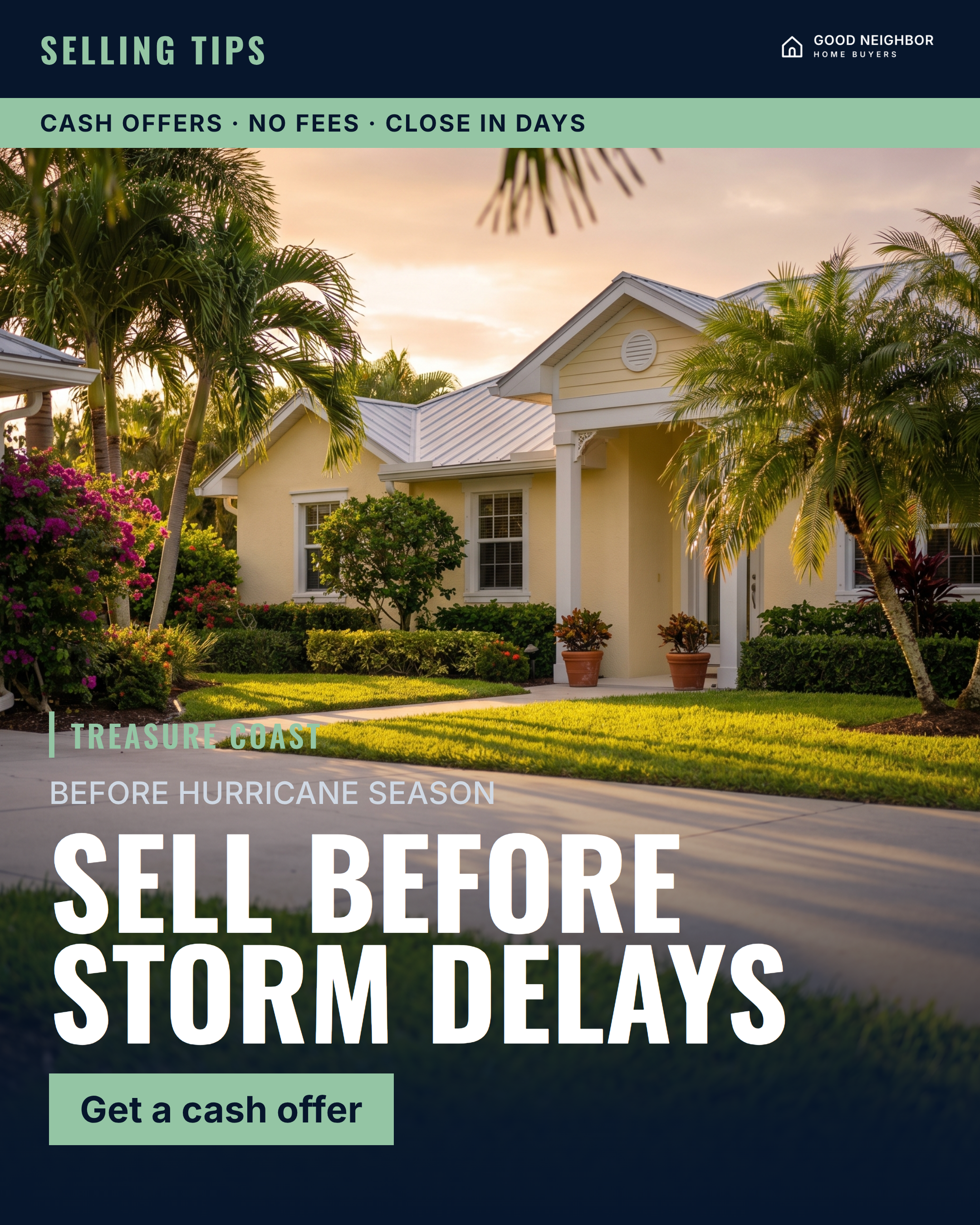
If you've been thinking about selling, the months before June 1 deserve serious consideration. Deciding to sell a house before hurricane season in Florida isn't about panic — it's about understanding how storms affect your home's value, your insurance costs, and the pool of buyers willing to make an offer on the Treasure Coast.
Here's what homeowners in St. Lucie County, Martin County, and Indian River County should know heading into the 2026 season.
Why Hurricane Season Changes the Selling Landscape
Florida's hurricane season runs from June 1 through November 30. During those months, everything from home inspections to insurance binding becomes more complicated. Many traditional buyers get cautious, and lenders sometimes delay closings if a named storm is approaching.
On the Treasure Coast specifically — from Sebastian down through Fort Pierce, Port St. Lucie, and Stuart — coastal and low-lying properties face added scrutiny. Flood zone designations, aging roofs, and older hurricane shutters can all become sticking points once storm season is active.
Selling before the season starts removes that uncertainty. You close on a clear timeline without weather delays or last-minute insurance complications.
The Insurance Factor Is Real
Florida's property insurance market has been under pressure for several years, and 2026 is no exception. Premiums on the Treasure Coast have climbed significantly, and some carriers have pulled out of the market entirely. For sellers, this matters because a buyer who can't secure affordable insurance may walk away from a deal.
If your home has an older roof, prior storm damage, or open insurance claims, these issues become magnified during hurricane season. Our guide to selling during Florida's insurance crisis covers this in more detail, but the short version is: the earlier you sell, the fewer insurance-related hurdles you'll face.
What About Homes with Existing Storm Damage?
Some Treasure Coast homeowners are still dealing with damage from past hurricanes — unrepaired roofs along Midway Road in Fort Pierce, water-stained ceilings in older Palm City homes, or compromised siding in neighborhoods near the Indian River Lagoon. If that sounds familiar, you're not alone.
Selling a home with storm damage on the traditional market is difficult any time of year, but it becomes even harder once a new season begins. Buyers and their inspectors are looking for vulnerabilities. If you're in this situation, you can sell a storm-damaged house without making repairs first — something worth exploring before the next system forms.
Sell House Before Hurricane Season Florida: Timing and Options
The ideal window to close is between February and late May. That gives you time to assess your options, gather any paperwork, and finalize a sale while the weather is still calm and predictable.
If your home needs work — whether it's cosmetic updates, structural repairs, or code compliance issues — listing on the MLS can mean months of showings, negotiations, and contractor bids. Many Treasure Coast homeowners in this position choose to sell their house as-is in Florida to avoid that process entirely.
A cash sale can often close in a matter of weeks, which means you could be done well before the first tropical forecast of the season.
What Treasure Coast Sellers Should Prepare
Whether you sell traditionally or accept a cash offer, a few things help the process go smoothly:
Know your roof's age and condition. This is the single biggest factor in both insurance and buyer confidence on the Treasure Coast. If you have a roof inspection or permit records, keep them handy.
Disclose prior damage honestly. Florida law requires sellers to disclose known material defects. Being upfront about past storm damage builds trust and avoids legal issues down the road.
Check for open permits or claims. Unresolved building permits in St. Lucie County or open insurance claims can delay or derail a closing. It's better to know about these early.
Understand your flood zone. Many properties along US-1, near the St. Lucie River, or in older sections of Jensen Beach sit in FEMA flood zones. This affects what buyers will pay and what insurance will cost them.
A Calm, Straightforward Path Forward
At Good Neighbor Home Buyers, we're a family-owned company based right here on the Treasure Coast. We buy homes directly — no agents, no commissions, no repair requirements. If you're considering selling before hurricane season and want to understand what a cash offer might look like for your property, we're happy to have that conversation with no pressure and no obligation.
You can request a no-obligation cash offer online, or call us directly at (772) 448-1829.
Frequently Asked Questions
Is it harder to sell a house during hurricane season in Florida?
It can be. Traditional buyers may hesitate, lenders may impose weather-related delays, and insurance binding becomes more difficult once a storm is named. Selling before June 1 avoids most of these complications.
Can I sell my Treasure Coast home if it has hurricane damage?
Yes. Cash buyers like Good Neighbor Home Buyers purchase homes in any condition, including those with unrepaired storm damage. You won't need to make repairs before selling.
How fast can I close if I sell before hurricane season?
A cash sale can often close in as little as two to three weeks, depending on the title work and your preferred timeline. That's typically much faster than a traditional listing.
Do I need to update my roof before selling?
Not if you sell as-is to a cash buyer. On the traditional market, however, an aging roof can be a dealbreaker — especially heading into storm season when insurance companies are most cautious.
- More Property Condition & Florida Insurance
- Sell a Florida house as-is
- Sell a damaged Florida house
- Selling as-is in Florida guide
- Florida insurance and damaged-home guide
- request a no-obligation cash offer
- Sell House As Is in Vero Beach: A Practical Homeowner Guide
- How to Sell a House That Needs Repairs in Port St. Lucie
- Vacant House With a Leak: What to Document Before Repairs or Selling
This article is general information, not legal or financial advice. For your specific situation, talk to a qualified professional.