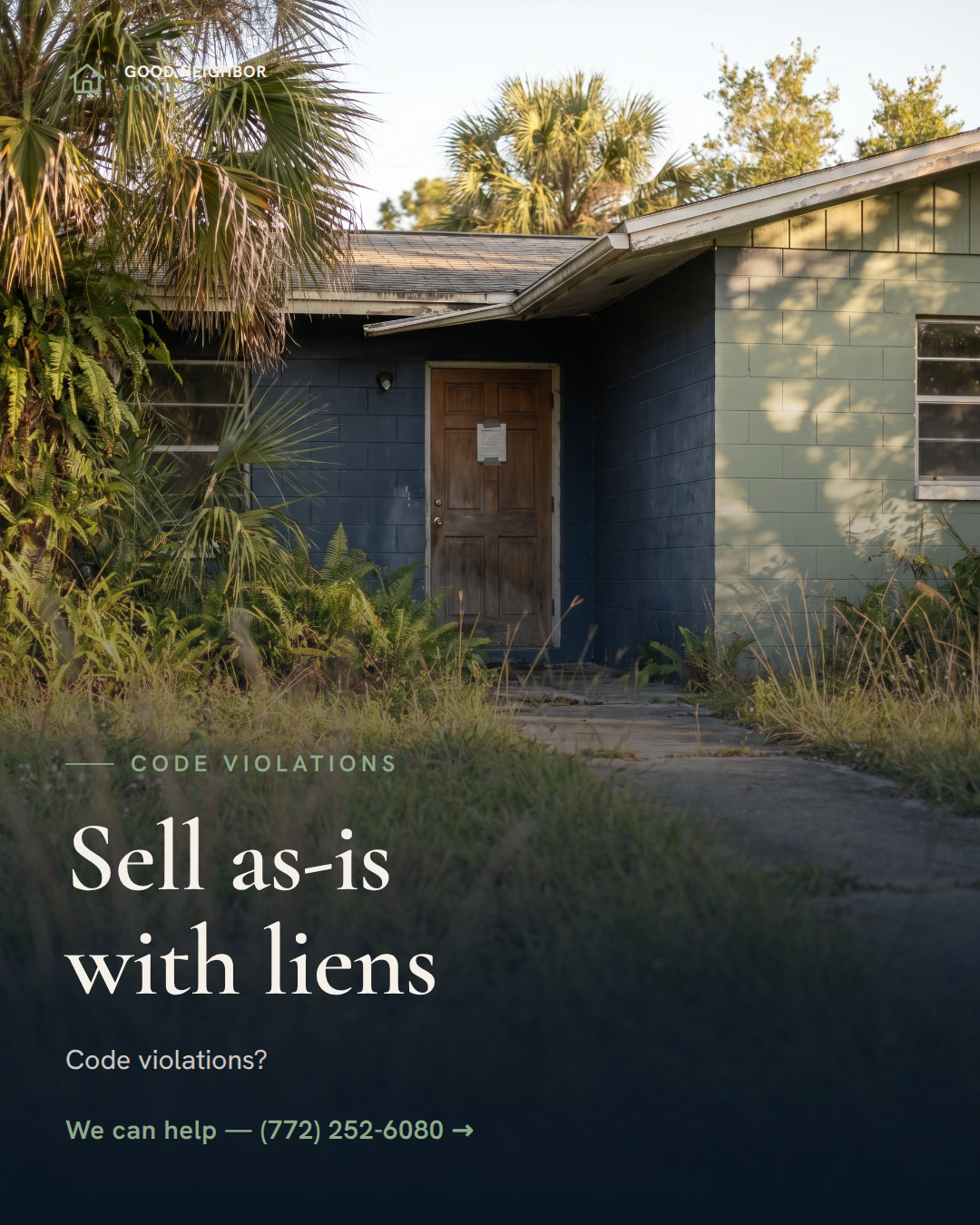
If you own a property in St. Lucie County with open code violations or liens attached to the title, you already know the stress that comes with it. Daily fines can pile up, letters from the county keep arriving, and listing the home through traditional channels feels like a dead end. The good news: you can sell a house with code violations in Florida — even with liens — but it helps to understand what you're dealing with first.
What Code Violations Actually Mean for Sellers in St. Lucie County
A code violation is a notice from the local government that your property doesn't meet current building, zoning, or safety standards. In St. Lucie County, these are enforced by the county's Code Enforcement Division. Common issues include unpermitted additions, overgrown lots, structural damage, and missing smoke detectors or handrails.
Some violations are minor and can be resolved with a quick fix. Others — like unpermitted work on homes along Prima Vista Boulevard or aging properties near downtown Fort Pierce — can involve significant expense to bring up to code. And if a violation goes unresolved, the county can record a lien against your property.
How Violations Turn Into Liens
When a code violation isn't corrected within the timeframe the county sets, daily fines begin accruing. Those fines eventually become a code enforcement lien recorded against your property's title. In some cases, we've seen St. Lucie County liens grow to tens of thousands of dollars — sometimes exceeding what the home itself is worth.
These liens don't just disappear. They have to be addressed before a clean title can transfer to a new owner. That's one reason traditional buyers and their lenders often walk away from properties with unresolved violations.
Can You Sell a House With Code Violations in Florida Through a Traditional Listing?
Technically, yes. But practically, it's very difficult. Most buyers who use mortgage financing need the home to pass an appraisal and inspection. Open code violations and liens create title issues that can delay or kill a closing entirely.
Real estate agents may be reluctant to list a property with serious violations because it limits the buyer pool to cash buyers anyway. And if the violations require costly repairs before listing, you're spending money on a home you're trying to leave behind.
What About Liens From Other Sources?
Code enforcement liens aren't the only kind that can complicate a sale. Properties in Port St. Lucie, Fort Pierce, and surrounding areas sometimes carry tax liens, contractor liens, or HOA liens as well. Each one has to be resolved or negotiated at closing. If you're dealing with multiple liens or back taxes, our guide on selling a house with liens or back taxes walks through how that process works step by step.
Selling As-Is to a Cash Buyer
This is where a direct cash sale becomes a practical option — not a magic solution, but a realistic path forward. A cash buyer like Good Neighbor Home Buyers can purchase a property in its current condition, violations and all, without requiring you to make repairs or clear every issue before closing.
Here's generally how it works:
We look at the property, research the title, identify any liens or violations, and factor all of that into a fair cash offer. At closing, outstanding liens are typically paid from the sale proceeds or negotiated with the lienholder. You don't have to manage that process yourself.
This approach works especially well for homeowners in neighborhoods like Garden City in Fort Pierce or older sections of Port St. Lucie off US-1, where aging homes are more likely to have accumulated violations over the years.
Can the County Reduce Code Enforcement Fines?
Sometimes, yes. St. Lucie County has a process where property owners (or buyers) can petition the Code Enforcement Special Magistrate to reduce accrued fines. There's no guarantee of a reduction, but it's a step worth exploring — especially when the fines have grown disproportionate to the original violation.
When we purchase a property with code enforcement liens, we often handle this negotiation as part of the closing process. It's one less thing on your plate.
What to Do if You're Getting Fined Right Now
If you're currently receiving violation notices or watching daily fines add up, time matters. The longer you wait, the larger the lien grows, and the less equity you may have left in the property.
Start by calling St. Lucie County Code Enforcement to understand exactly what violations are open and what fines have accrued. Then weigh your options: fix the violations yourself, list the property and hope for a cash buyer, or reach out to a direct buyer who handles these situations regularly.
If you'd like to know what a cash offer might look like for your specific situation, you can request a no-obligation offer here or call us at (772) 252-6080.
Frequently Asked Questions
Do I have to fix code violations before selling my house in Florida?
No. While violations need to be addressed before a clean title transfers, a cash buyer can purchase the property as-is and handle the resolution of violations and liens as part of the closing process. You don't necessarily have to make repairs yourself.
Will code enforcement liens transfer to the new owner?
Code enforcement liens attach to the property, not the person. They must be satisfied or negotiated at closing. In a cash sale, this is typically handled through the title company using sale proceeds.
How long does it take to sell a house with code violations in St. Lucie County?
Through a traditional listing, it can take many months — or the home may not sell at all if violations are severe. A direct cash sale can often close in a few weeks, depending on the complexity of the title issues involved.
Can Good Neighbor Home Buyers purchase a home with multiple liens?
We regularly work with properties that have code enforcement liens, tax liens, and other title issues. Every situation is different, so we can't guarantee a specific outcome, but we're happy to review your situation at no cost. Call us at (772) 252-6080.
This article is general information, not legal or financial advice. For your specific situation, talk to a qualified professional.