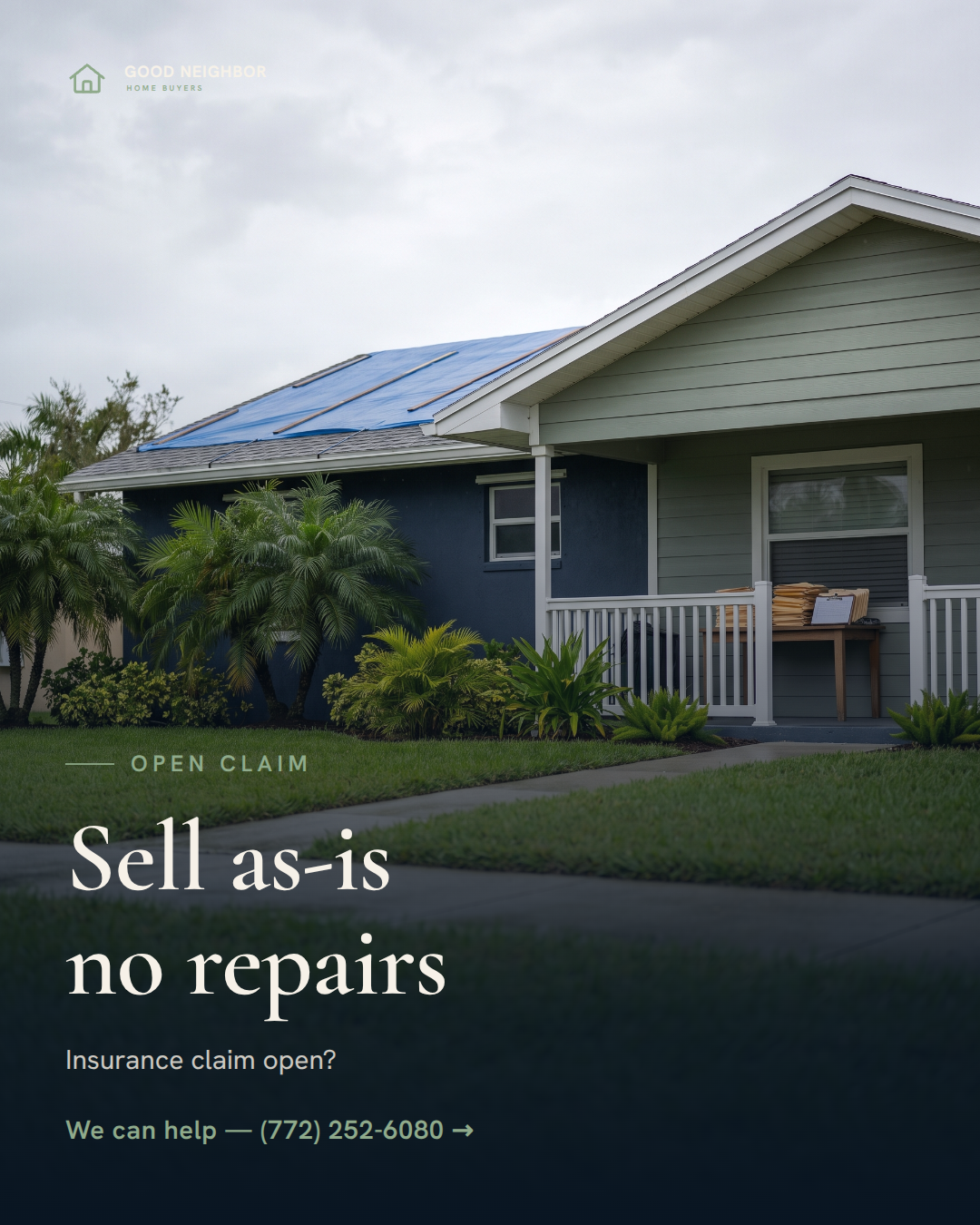
If you're trying to sell a house with an open insurance claim in Florida, you're probably juggling more stress than anyone should have to. Maybe a hurricane tore through your roof in St. Lucie County, or a burst pipe flooded your kitchen in Stuart. The damage is real, the claim is still being processed, and now you just want to move on. The good news: selling is possible. The not-so-good news: it takes some careful navigation.
What Happens to an Insurance Claim When You Sell?
An open insurance claim doesn't automatically prevent you from selling your home. But it does add a layer of complexity that both you and any buyer need to understand.
In Florida, a homeowner's insurance policy is a contract between you and your insurer. When you sell the property, the claim doesn't just vanish — and it doesn't automatically transfer to the new owner, either. What happens to the claim proceeds depends on the timing of the sale, the language in your policy, and how the settlement is structured.
The Three Common Scenarios
1. You settle the claim before closing. This is the cleanest path. You receive the insurance payout, make the repairs (or don't), and sell the home. If you choose not to repair, you'll likely sell at a lower price that reflects the home's current condition.
2. You assign the claim to the buyer. Florida law generally allows the assignment of post-loss insurance benefits, though recent legislative changes have tightened the rules. If both parties agree, the buyer can step into your shoes and continue pursuing the claim after closing. This requires careful paperwork and cooperation from your insurer.
3. You sell the home as-is and keep the claim proceeds. In some cases, you and the buyer negotiate a sale price that accounts for the damage, and you retain whatever the insurer pays out. This works best when the buyer — often a cash buyer — is comfortable purchasing a storm-damaged or water-damaged house and handling repairs themselves.
Why Selling a House With an Open Insurance Claim in Florida Gets Complicated
Traditional buyers who need a mortgage often can't close on a home with unresolved damage. Lenders require the property to meet certain habitability and condition standards before they'll fund a loan. If your roof is tarped or your floors are ripped up, most banks will walk away.
That's before you factor in the inspection, the appraisal, and the buyer's own cold feet. Along US-1 in Fort Pierce or in neighborhoods like Palm City and Jensen Beach, we've seen homeowners wait months for a financed buyer who never materializes — all while the insurance claim drags on.
Disclosure Is Not Optional
Florida law requires sellers to disclose known material defects. An open insurance claim tied to property damage absolutely qualifies. Trying to hide it isn't just unethical — it can expose you to legal liability long after closing.
Be upfront. The right buyer won't be scared off by honesty. The wrong buyer will find out eventually anyway.
How a Cash Sale Can Simplify Things
When a Treasure Coast homeowner comes to us with an open claim, the conversation is usually simpler than they expected. A cash buyer like Good Neighbor Home Buyers doesn't need bank approval, doesn't require an appraisal, and isn't fazed by a property that needs work.
Here's what that looks like in practice: we evaluate the home in its current condition, factor in the damage, and present a straightforward cash offer. No waiting for the insurance company to finish adjusting. No staging a half-repaired house for showings.
You can see exactly how our process works — it's designed to be transparent from the first phone call to the closing table.
What About the Claim Money?
This is the question everyone asks, and the answer depends on your situation. In many cases, you and the buyer agree on how the claim proceeds are handled as part of the purchase contract. Sometimes the seller keeps the payout and the sale price reflects the damage. Sometimes the claim is assigned. There's no single right answer — it's a negotiation, and a good buyer will walk you through the options honestly.
We always recommend consulting with your insurance agent or a real estate attorney before making any decisions about assigning or settling a claim in connection with a sale.
A Few Things to Keep in Mind
Timing matters. If your claim is close to being settled, it may make sense to wait a few weeks. If it's been dragging on for months with no resolution — which is unfortunately common in Florida's current insurance climate — selling as-is to a cash buyer may save you more in carrying costs than the claim is worth.
Not all claims are equal. A minor water damage claim is very different from a total-loss fire. The type and severity of the damage will shape your options and your likely sale price.
Your mortgage lender has a say. If you still owe on the home, your lender is likely listed as a loss payee on the insurance policy. That means claim checks may be issued jointly, and your lender will want to ensure repairs are made or the loan is satisfied at closing.
Frequently Asked Questions
Can I legally sell my Florida home while an insurance claim is still open?
Yes. There is no Florida law that prevents you from selling a home with an open insurance claim. However, you must disclose the claim and any related damage to potential buyers, and you'll need to work out how the claim proceeds are handled as part of the sale.
Will a buyer's lender allow them to purchase a home with unresolved damage?
Usually not. Most mortgage lenders require the property to be in acceptable condition before funding a loan. This is one reason cash buyers are often a better fit for homes with open claims or visible damage.
Do I have to use insurance money to repair the house before selling?
Not necessarily. In Florida, you're generally not required to use claim proceeds for repairs — but your mortgage lender may have requirements, and selling without repairs will likely mean a lower sale price.
How does Good Neighbor Home Buyers handle homes with open insurance claims?
We buy homes in as-is condition across the Treasure Coast, including properties with open claims. We'll walk through your specific situation, explain your options, and make a fair cash offer with no obligation. Call us at (772) 252-6080 or request a no-obligation cash offer online.
If you're stuck between an unresolved claim and a house you're ready to leave behind, we're happy to talk it through — no pressure, no timeline. Just honest answers from a local, family-owned company that's been in your neighbors' shoes. Call Good Neighbor Home Buyers at (772) 252-6080 whenever you're ready.
This article is general information, not legal or financial advice. For your specific situation, talk to a qualified professional.