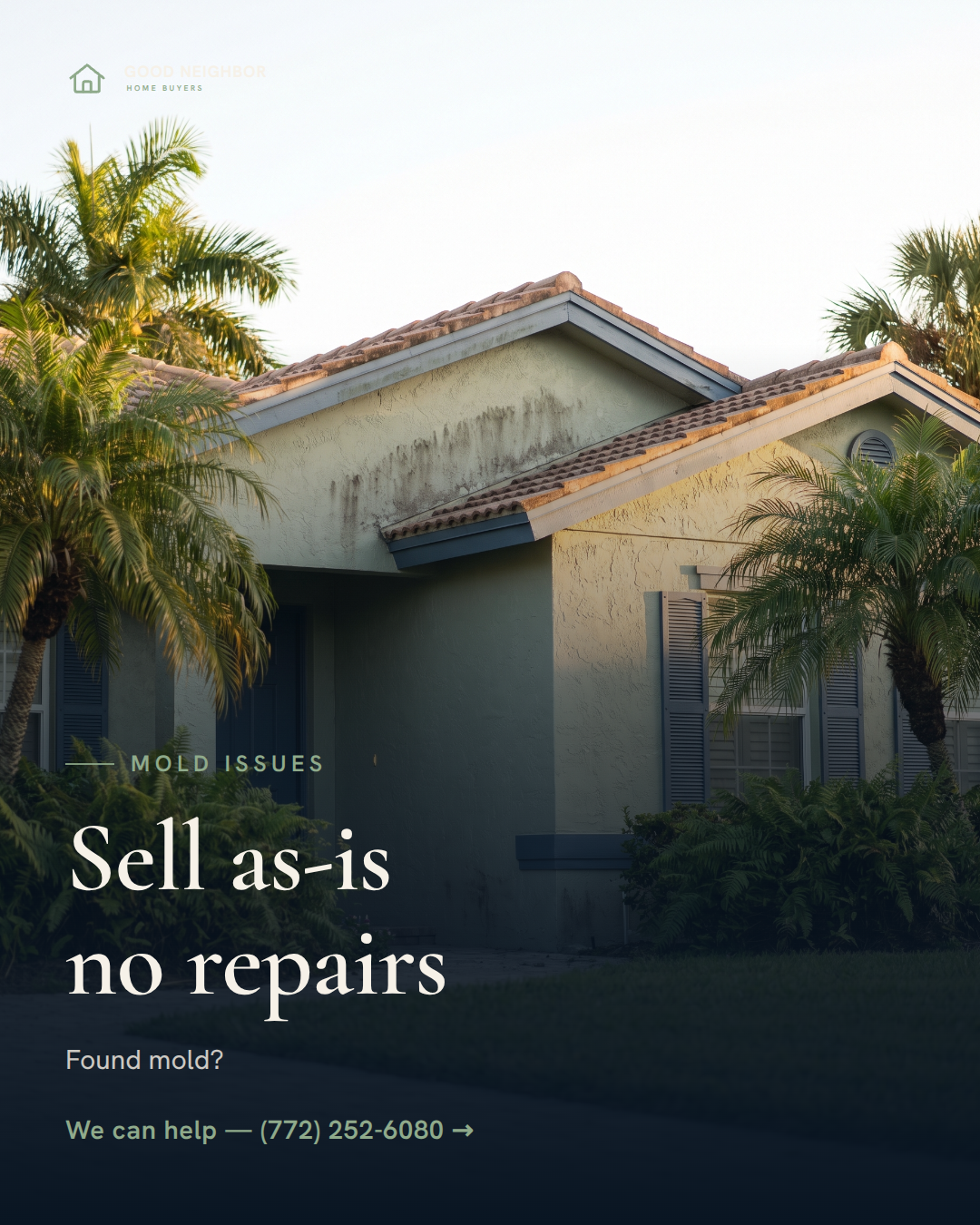
If you've discovered mold in your Florida home and you're thinking about selling, you're not alone. The Treasure Coast's warm, humid climate makes mold one of the most common property issues homeowners face — from Port St. Lucie to Stuart to Vero Beach. The good news: you can sell a house with mold in Florida, and you have more than one way to do it.
What matters most is understanding your legal obligations, having a realistic sense of what remediation costs, and knowing which path forward fits your situation. Let's walk through all of it.
Why Mold Is So Common on the Treasure Coast
Florida ranks among the highest states in the country for mold risk. Martin County, St. Lucie County, and Indian River County all sit in a subtropical zone where humidity regularly exceeds 60 percent indoors — the threshold where mold thrives.
Older homes along US-1 and in neighborhoods like Rio, Palm City, and Fort Pierce are especially vulnerable. Aging roofs, outdated HVAC systems, and past storm damage can all introduce moisture that feeds mold growth behind walls, under flooring, and in attic spaces.
If your home has been through a hurricane, a slow roof leak, or even a long vacancy with the AC turned off, mold may have taken hold without you realizing it. That's not unusual, and it doesn't make the home unsellable.
Florida's Mold Disclosure Requirements
Florida law requires sellers to disclose known material defects that affect a property's value. Mold qualifies. If you're aware of a mold problem — whether from a prior inspection, a remediation company's report, or your own observation — you're legally obligated to tell potential buyers.
This applies regardless of how you sell: through an agent, by owner, or to a cash buyer. Concealing a known mold issue can expose you to legal liability after closing, even if the buyer doesn't discover it right away.
The practical takeaway is simple. Be upfront. Honest disclosure protects you and sets the stage for a cleaner transaction, no matter which route you choose.
What Mold Remediation Actually Costs
Remediation costs vary widely depending on the scope of the problem. A small area of surface mold in a bathroom might cost a few hundred dollars to address. Widespread mold behind drywall, in ductwork, or under subflooring can run anywhere from several thousand dollars to $15,000 or more.
In Florida, licensed mold assessors and remediators are required for larger jobs. That means two separate professionals: one to assess and one to remediate. Both add to the cost.
For homeowners already dealing with financial pressure — maybe the mold came after water or storm damage — paying for full remediation before listing isn't always realistic. That's where selling as-is becomes a practical alternative.
Sell a House With Mold in Florida: Your Three Main Options
1. Remediate and List on the Open Market
If the mold problem is contained and you have the budget, fixing it before listing will give you the widest pool of buyers. Most traditional buyers — and their lenders — will want a clean mold clearance report before closing.
Keep in mind that even after remediation, you'll still need to disclose that the home previously had mold and that it was professionally treated. Some buyers will be fine with that. Others will walk.
2. List As-Is With an Agent
You can list the home as-is and price it to reflect the mold issue. This narrows your buyer pool significantly. Most conventional and FHA lenders won't finance a home with active mold, so you're largely looking at cash buyers or investors anyway.
Listing as-is through an agent still involves commissions, holding costs, and the uncertainty of how long the home will sit. Learn more about selling a house as-is in Florida to understand what that process looks like.
3. Sell Directly to a Cash Buyer
A direct sale to a cash home buyer skips the remediation, the listing, and the lender requirements entirely. At Good Neighbor Home Buyers, we buy homes on the Treasure Coast in as-is condition — including homes with mold, water damage, and deferred maintenance.
There are no commissions, no repair requests, and no financing contingencies that could fall through. You can request a no-obligation cash offer and decide on your own timeline whether it makes sense for your situation.
What Happens if You Ignore the Mold?
Mold doesn't resolve itself. In Florida's climate, it spreads. What starts as a patch behind a shower wall can migrate into framing, insulation, and HVAC systems. The longer it sits, the more expensive it becomes to address — and the more it affects your home's structural integrity and air quality.
If you're not planning to remediate, selling sooner rather than later typically works in your favor. The problem only gets costlier with time.
Frequently Asked Questions
Can I legally sell a house with mold in Florida?
Yes. Florida law does not prohibit selling a home with mold. However, you are required to disclose any known mold issues to the buyer. Failing to disclose can result in legal liability after the sale.
Will a buyer's lender approve a mortgage on a home with mold?
In most cases, no. Conventional, FHA, and VA lenders typically require a home to be free of active mold before approving financing. That's why many mold-affected homes end up selling to cash buyers.
How fast can I sell a mold-affected home to a cash buyer?
Timelines vary, but a direct cash sale can often close in as little as two to three weeks since there's no lender approval, no appraisal contingency, and no need for repairs. At Good Neighbor Home Buyers, we work on whatever timeline suits you.
Do I need a mold inspection before selling?
You're not legally required to get a professional mold inspection before selling, but having one can help you understand the scope of the issue and make informed decisions. If you're selling to a cash buyer as-is, the buyer typically handles their own assessment.
If you're dealing with mold in a Treasure Coast home and want to understand your options, we're happy to have an honest conversation. Call Good Neighbor Home Buyers at (772) 252-6080 or request a no-obligation cash offer online. No pressure, no surprises — just a straightforward look at what we can do.
This article is general information, not legal or financial advice. For your specific situation, talk to a qualified professional.