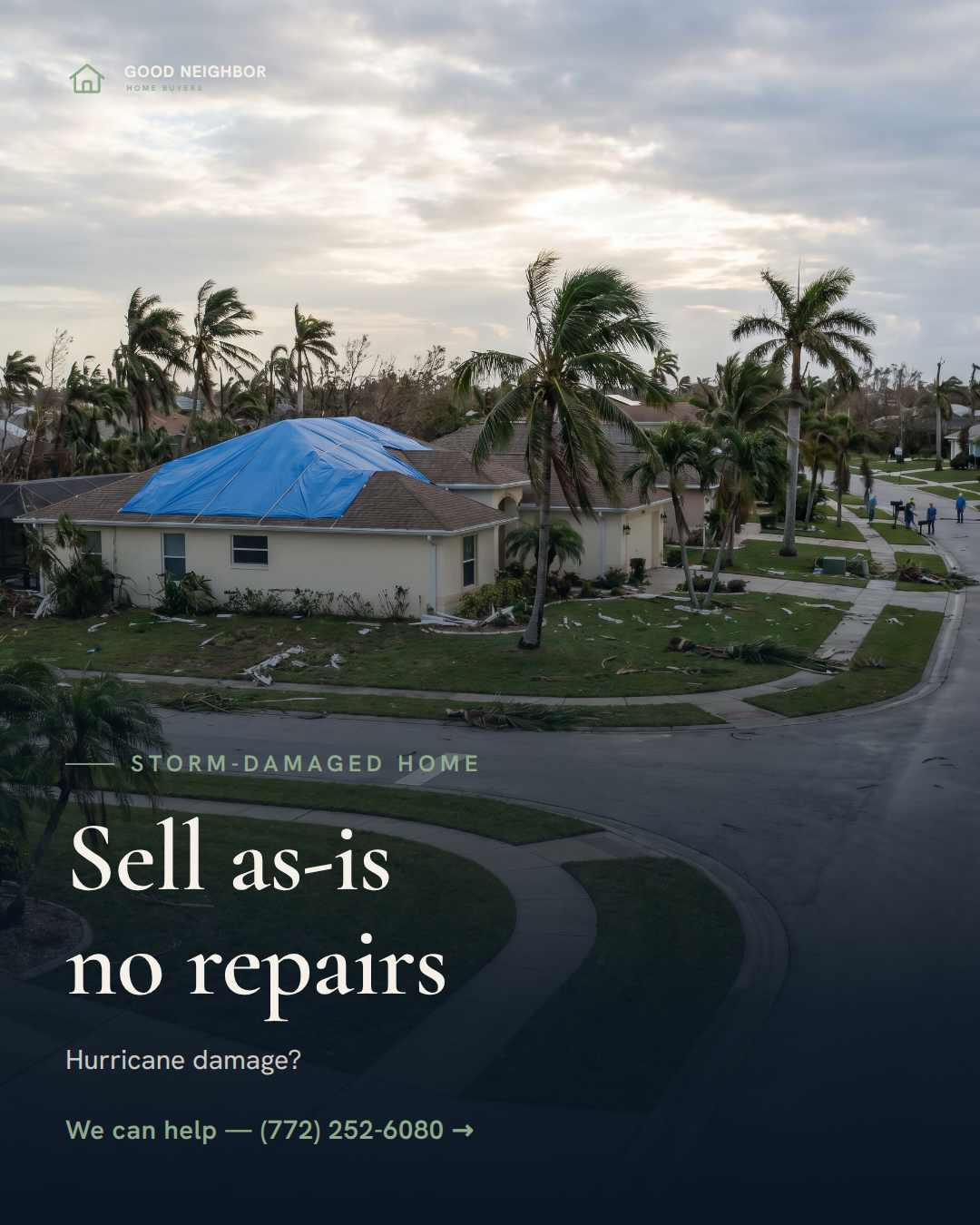
After a hurricane tears through Florida's Treasure Coast, the damage left behind can feel overwhelming. Between tarped roofs, flooded interiors, and an insurance process that seems designed to test your patience, many homeowners start asking a very reasonable question: can I just sell a storm damaged house in Florida and move on with my life?
The short answer is yes. But the path you choose matters, and it helps to understand what you're really dealing with before making a decision.
What Hurricane Damage Actually Does to Your Options
Storm damage doesn't just affect your home — it affects your ability to sell it through traditional channels. Most conventional buyers rely on mortgage financing, and lenders won't approve a loan on a property with significant structural or roof damage. That alone can take a traditional listing off the table.
Even if you find a buyer willing to pay cash on the open market, the negotiation usually centers on repair estimates. And in the months following a major storm, contractor availability along the Treasure Coast — from Fort Pierce to Stuart to Port St. Lucie — can stretch timelines out by months.
The Insurance Question You Need to Settle First
Before you sell, you'll want to understand where things stand with your insurance claim. Florida's property insurance landscape has been shifting significantly, and many homeowners on the Treasure Coast have found themselves underinsured or caught in long disputes with carriers.
If you have an open claim, you can still sell your home. In many cases, the insurance claim can be assigned or settled as part of the sale. But this is something to discuss with your insurance company and, ideally, a public adjuster or attorney if the claim is contested.
We wrote a more detailed breakdown of how Florida's insurance crisis affects homeowners trying to sell a damaged property — it's worth reading if you're in that situation right now.
What If Your Claim Was Denied or Underpaid?
This is more common than most people realize. If your payout doesn't come close to covering the repairs, you're left choosing between paying out of pocket, living with the damage, or selling as-is. None of those options are ideal, but selling as-is at least gives you a clean break and cash in hand.
Selling a Storm Damaged House in Florida As-Is
When we say "as-is," we mean exactly that. No repairs, no cleanup, no contractor bids. You sell the property in its current condition, and the buyer takes on everything from there.
At Good Neighbor Home Buyers, this is what we do. We buy homes across Martin County, St. Lucie County, and Indian River County — including properties with hurricane damage, water intrusion, mold, and roof failures. We've seen homes along US-1, in neighborhoods like River Park and Palm City, that looked like total losses but still had real value to the right buyer.
We're not real estate agents, and we don't list your home on the MLS. We make a direct cash offer based on the property's current condition and the local market. There's no commission, no staging, and no waiting for a buyer's financing to come through. You can learn more about how we handle fire, water, and storm damaged properties on our site.
What About the Disclosure Requirements?
Florida law requires sellers to disclose known material defects. If your home has hurricane damage — whether it's been repaired or not — you need to be upfront about it. This is true whether you sell to us, list with an agent, or sell to a neighbor. Honesty protects everyone involved.
When It Makes Sense to Repair vs. Sell
Not every storm-damaged home should be sold as-is. If your insurance fully covers the repairs and you have a reliable contractor lined up, restoring the home and selling traditionally might net you more money. That's just honest math.
But if you're dealing with denied claims, rising premiums, contractor delays, or you simply don't want to manage a rebuild — especially if you've already relocated — selling as-is to a cash buyer can save you months of stress and carrying costs like property taxes, HOA fees, and additional insurance premiums.
Frequently Asked Questions
Can I sell my house if it still has an open insurance claim?
Yes. In most cases, the claim can be assigned to the new buyer or settled before or at closing. It's important to coordinate with your insurance carrier and possibly a legal professional to make sure the transfer is handled properly.
Do I need to make any repairs before selling to a cash buyer?
No. When you sell to Good Neighbor Home Buyers, we buy the property in its current condition. You don't need to fix, clean, or even remove personal belongings if you don't want to.
How quickly can I close on a storm-damaged home?
We can typically close in as few as two to three weeks, though the timeline depends on title work, any open liens, and whether there's an insurance claim to resolve. You choose the closing date that works for you.
Will I get a fair price for a damaged property?
We base our offers on the home's current condition, the cost of repairs, and comparable sales in the area. We can't guarantee a specific price, but we're always transparent about how we arrive at our number — and there's never any obligation to accept.
If your home on the Treasure Coast was damaged in a hurricane and you're weighing your options, we're happy to have an honest conversation about what makes sense for your situation. Call us at (772) 252-6080 or request a no-obligation cash offer online. No pressure, no timeline — just a straightforward look at what we can do.
This article is general information, not legal or financial advice. For your specific situation, talk to a qualified professional.