If you own a home on the Treasure Coast and you're thinking about selling, you're probably wondering what the treasure coast housing market 2026 actually looks like — beyond the headlines. The short answer: it's a market in transition, and understanding the local details matters more than ever.
We're Good Neighbor Home Buyers, a family-owned cash home buyer based right here on the Treasure Coast. We're not real estate agents or brokers, and we don't pretend to have a crystal ball. What we can do is share what we're seeing on the ground across Martin County, St. Lucie County, and Indian River County — and help you think through your options clearly.
What's Shaping the Treasure Coast Housing Market 2026
Several forces are converging this year that make the Treasure Coast market feel different from the frenzy of 2021–2022. Inventory has been gradually climbing. Homes are sitting longer in many neighborhoods, from Port St. Lucie's Tradition area to established communities along Jensen Beach and Vero Beach's mainland.
At the same time, buyer demand hasn't disappeared — it's just become more selective. Buyers in 2026 are cautious about overpaying, and many are factoring in the true cost of ownership, including insurance, HOA fees, and flood zone considerations.
Insurance and Carrying Costs Are Part of the Conversation
One of the biggest stories on the Treasure Coast isn't about home prices at all — it's about property insurance. Rising premiums across Florida have changed the math for both buyers and sellers. A home along Hutchinson Island or in a flood-prone area of Stuart may be worth less on paper simply because the annual cost to insure it has climbed significantly.
If you're a seller, this means pricing your home realistically matters more than it did a few years ago. Buyers and their lenders are looking at the full picture, not just the listing price.
Longer Days on Market Across the Region
Homes in many Treasure Coast neighborhoods are taking longer to sell through traditional listings compared to 2023 and 2024. This is especially noticeable in the mid-price range — roughly the $300,000 to $500,000 bracket — where competition among sellers has increased.
Areas like Fort Pierce's north side, parts of Palm City, and neighborhoods off US-1 in Indian River County are all seeing this trend. It doesn't mean homes aren't selling. It means patience and realistic expectations are essential.
What This Means If You're Thinking About Selling
If you're considering selling your Treasure Coast home in 2026, you have a few paths forward. Each one has trade-offs worth understanding.
Listing with an Agent
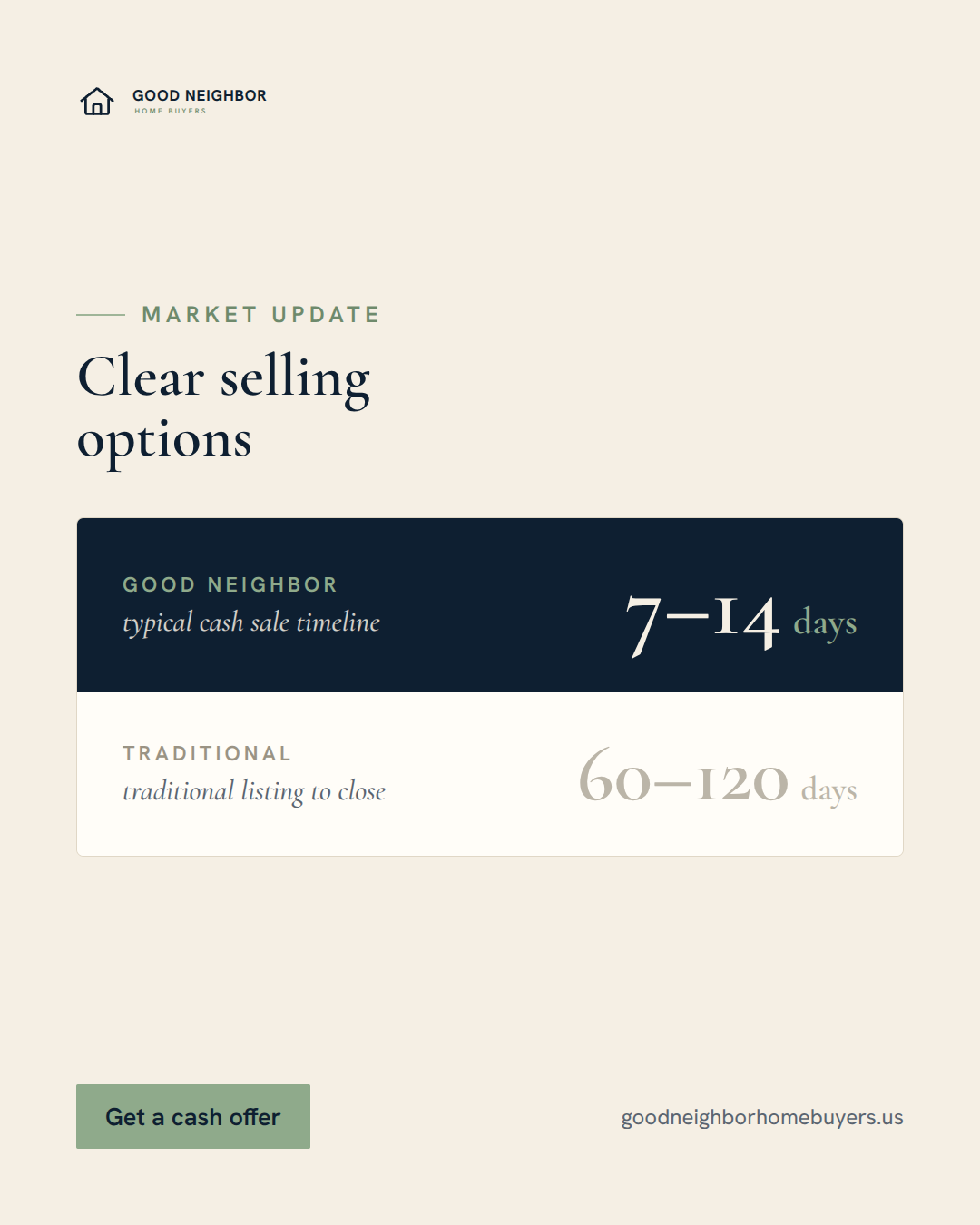
A traditional listing can still work well, especially for updated homes in desirable locations. But be prepared for the process to take time — potentially several months from listing to closing — and for negotiations around inspections, repairs, and appraisal gaps.
Selling Directly for Cash
For homeowners who value speed, simplicity, or need to avoid the uncertainty of a traditional sale, selling directly to a cash buyer is worth exploring. There are no commissions, no staging, and no waiting for a buyer's financing to come through. If you're curious what a direct sale might look like for your property, you can request a no-obligation cash offer from our team.
This route tends to make the most sense for homes that need work, inherited properties, or situations where timing is a priority — but it's an option for any homeowner.
Understanding Your Home's Value
Whatever path you choose, starting with a clear sense of your home's current value is important. Market conditions, location, condition, and even your specific street can all affect what your home is worth today. Our guide on what your Treasure Coast home is worth walks through the key factors in plain English.
A Few Local Trends Worth Watching
New construction in St. Lucie County continues to compete with resale homes, especially in master-planned communities west of I-95. If you're selling an older home nearby, this is something to factor into your pricing.
Downtown Stuart and Vero Beach's beachside remain desirable, but even premium areas aren't immune to longer selling timelines. Condition and pricing accuracy are the two biggest levers sellers can control.
Flood zone reclassifications and updated FEMA maps are also affecting certain pockets of the Treasure Coast. If your property's flood zone designation has changed, it's worth understanding how that impacts buyer interest and insurance costs.
Frequently Asked Questions
Is the Treasure Coast housing market crashing in 2026?
No. The market is shifting toward more balanced conditions, with higher inventory and longer selling timelines in many areas. This is a correction from the unusually fast-paced market of recent years, not a crash. Homes are still selling, but pricing accuracy and patience matter more.
How long does it take to sell a home on the Treasure Coast right now?
Through a traditional listing, many homes are taking 60 to 120 days or more from listing to closing, depending on location, price, and condition. Selling directly to a cash buyer can often be completed in as little as one to two weeks.
Should I make repairs before selling my Treasure Coast home?
It depends on your situation. Major repairs can help with a traditional listing, but they cost money and take time. If your home needs significant work, selling as-is to a cash buyer may be a simpler path. There's no single right answer — it comes down to your priorities and timeline.
Can I get a cash offer on my home without any obligation?
Yes. At Good Neighbor Home Buyers, we provide honest, no-obligation cash offers. There's no pressure and no commitment required. You can reach us at (772) 448-1829 or request an offer through our website.
If you'd like to talk through your options or simply want to understand what a fair cash offer might look like for your home, we're here to help. Call us at (772) 448-1829 or request your no-obligation cash offer online. No pressure, no surprises — just a straightforward conversation.
- More Cash Sale, Costs & Process
- Request a no-obligation cash offer
- Compare Florida cash home buyers
- How to verify a legitimate cash buyer
- How cash offers are calculated
- what your Treasure Coast home is worth
- Cash Home Buyers in Stuart FL: What Sellers Should Know
- Real Estate Investing on the Treasure Coast: 2026 Guide
- We Buy Houses Companies in Florida: Good vs Bad
This article is general information, not legal or financial advice. For your specific situation, talk to a qualified professional.